

Why continuing education in graphic design is crucial for professional brand design
Date
Written by
Emily Finke
Reading time
4 min.
Knowledge
A personal experience report
Good design does not happen by chance. Especially in brand design, a clean concept determines whether a brand works in the long term or appears interchangeable. It was precisely this standard that led me to complete a one-year, fully digital continuing education program in graphic design at OfG / Online School of Design – in addition to my career change into web design.
In this article, I share my experiences, why continuous professional development is essential for professional brand design, and what concrete added value it brings to our work at splendid learning.
Starting point: From web design to holistic brand design
My entry into design began through web design. As a career changer, I built up a lot of practical knowledge here. However, it became clear to me relatively quickly:
A compelling web presence stands or falls with a strong design foundation.
Especially in exchanges with founders and clients building a brand, it became clear how important solid knowledge in the areas of typography, color concepts, visual hierarchies, and design systems is. To strategically further develop our brand design services – including logo development – one thing was clear to me: I don't just want to "apply" design, but to be able to understand, justify, and conceptualize it.
The continuing education: theory, practice, and consistent transfer
A central criterion when selecting the program was the combination of theory and practice. The training was structured entirely online and extended over twelve months – with a clear rhythm:
12 modules in 12 months
new content every month
flexible options for breaks and skipping
a practical assignment for each module
detailed, individual feedback
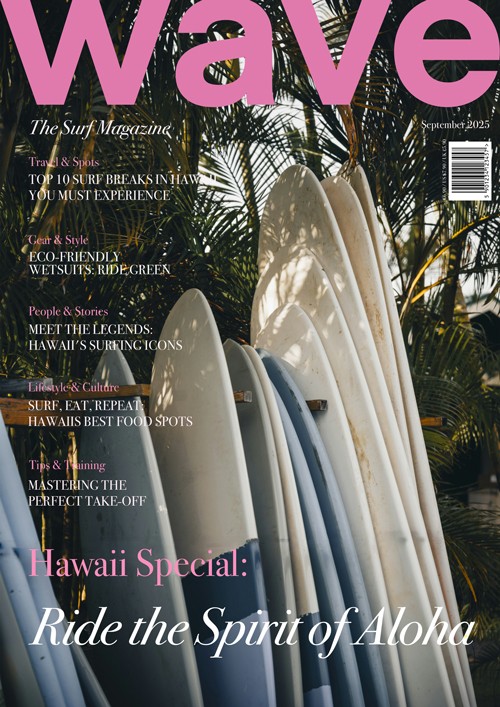
What was especially valuable for me was that the content was built up step by step. The assignments ranged from very basic design exercises – such as color compositions with abstract forms – to more complex projects such as:
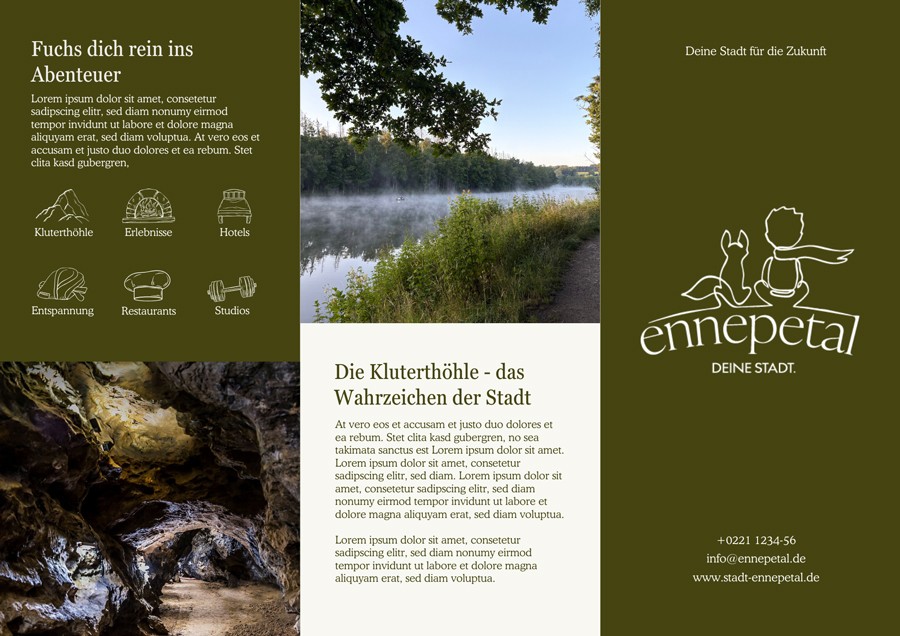
development of a visual city campaign
screen design and digital applications
independent final project with your own concept
This allowed me not only to learn the theory, but to apply, reflect on, and further develop it directly.
What I do differently (and better) today
The biggest change is not in individual tools, but in thinking in concepts.
Today I can:
build and justify design concepts in a structured way
select and evaluate typography more consciously
grasp and apply visual systems more quickly
explain design decisions clearly – internally and externally
reliably transfer design principles to web design and social media
This not only leads to better results, but also to more efficient processes. Designs are created in a more targeted, consistent, and understandable way – a decisive factor, especially in brand design.
Who this continuing education is particularly suitable for
I can clearly recommend this training – especially for:
beginners in graphic design
career changers who want to learn design in depth
anyone who is willing to invest time, practice, and initiative
What matters is this: the training does not replace years of practice. However, it creates a strong foundation on which professional work becomes possible.
Why continuing education is part of our mindset at splendid learning
At splendid learning, we see continuing education not as an extra, but as a prerequisite for quality. Design, digital products, and brands are constantly evolving – and with them, our clients' requirements.
The fact that I was able to complete this training reflects a company culture that promotes learning, enables development, and thinks long term. We bring this same standard to our client projects – especially in brand design for founders and growing companies.
Conclusion: Good brand design requires solid knowledge
Anyone who wants to build brands needs more than just a good sense of design. It takes understanding, structure, and the ability to use design strategically. Continuing education is not a detour for this – but the most direct path to sustainable quality.


